If you spend enough time with accordion security gates, you start to hear them before you see them. The rattle at close, the scrape along a track that has taken on a life of its own, the metallic sigh of a lock bar that wants lubrication more than you want coffee. That soundtrack tells you plenty about the gate’s health, often weeks before a failure. I’ve installed, adjusted, and baby-sat more expanding security gates than I can count, from tidy retail fronts to rough freight corridors. The pattern is consistent: noise reveals wear, and wear forecasts maintenance needs. Treat the soundtrack seriously and your gate will behave like a loyal guard dog, not a tantrum-prone toddler.
Let’s talk about why accordion security gates get noisy, what that noise means, how wear actually develops, and the maintenance cadence that keeps commercial security gates working quietly and reliably. I’ll touch the differences among scissor security gates, wall-to-wall expanding security gates, and double-stack storefront gates, because each one fails in its own charming way. If you’re sourcing for a chain, seeking a security gate supplier for a single storefront, or pricing expanding security gates in Kelowna or anywhere else, you’ll leave with a clear playbook.
The mechanical DNA of an accordion gate
An accordion gate is a set of vertical members tied together with diagonally crossing scissor arms riding on a top track, sometimes with a bottom guide. Movement comes from the scissor geometry: pull the leading stile, the lattice collapses, push it out, the lattice opens and locks. The top assembly takes the load. The bottom contact, if present, keeps the line straight. The lock throws into a receiver, a floor socket, or a jamb.
Key wear points live where steel meets steel. Pivot rivets in the scissor arms serve as hinges and loosen with cycles. Nylon or steel rollers carry the load along the track. Tracks themselves deform from point loads or improper anchors. Lock rods drag in their housings when grit builds up. None of this is scary, but the system only stays quiet if everything stays aligned and lubricated.
The soundtrack: what the noises actually mean
A gate that used to glide but now complains is trying to talk to you. Here is how I translate the vocabulary.
- Hollow rattle along the top: That’s play in the scissor pivots or a roller that lost its bushing. The vibration resonates through the track. Expect to find at least one sloppy rivet or a roller with flat spots. Scratchy zipper sound: Dust and metal fines in the track, often in dry climates or dusty stockrooms. You will see gray streaks where the roller path polished the track. Lubrication helps, but cleaning first helps more. Single hard knock at a certain spot: A track screw sitting proud, a dent in the track, or a mismatched splice. You will feel this as a bump under the lead post every time you pass that location. Resonant clank at full open or full close: Loose keeper bracket, misaligned lock receiver, or a lead post that is over-extending because a stop is missing. Low groan under load: The gate is carrying more weight than it should at one point, often due to sag. This can trace back to anchors pulling away from a weak header or drywall shims crushed flat.
Once you hear these categories, you can diagnose most issues without tools. Listen, then look.
Why wear accelerates in real buildings
Specs look clean on paper. Real sites ruin symmetry. I have seen gorgeous scissor security gates installed perfectly in an empty unit, only to start dragging three months later when someone added a pallet rack and the floor took a set. Doors that open onto sidewalks meet sand and de-icing salts. Malls dump overnight cleaning water that wicks into bottom guides. Restaurants atomize cooking oil that drifts and congeals inside tracks. It only takes a small contaminant load to change friction.
Gate misuse is the other accelerator. Closing a heavy gate by yanking the lead post sideways twists the scissor geometry. Pushing the gate open with the lock still engaged bends the lock rod or deforms the receiver. Rolling ladders through partially opened gates leave slight kinks that become friction points later. These are human problems, so training matters more than torque specs.
Finally, cheap hardware compounds everything. The difference between a bargain roller and a decent one shows up in the second year. Low-grade tracks deflect at the anchor, then https://emilioxduf542.huicopper.com/kelowna-retail-preventing-burglaries-with-expanding-gates the roller rides a shallow pocket and hammers the same spot forever. Over time, that becomes a noise you can hear from a block away.
Anatomy of common failures, from mild to loud
A few failures show up on almost every site. They follow a predictable arc.
Early stage: A gate that used to glide now develops stiction at startup. You need a little more push to get it going, but once it moves, it’s fine. This usually indicates dust in the track or dry rollers. The sound is light, like sand in a shaker. Maintenance now is cheap: clean the track, apply a light, non-gumming lubricant, check the lock receiver for burrs.
Middle stage: Now you get a single clunk when you pass a certain spot, and the lead post starts to wander off-line. When closed, the gate doesn’t sit perfectly plumb. Expect a track misalignment, a loose splice plate, or hardware backing out at the header. You may also find a scissor arm with a stretched rivet hole, which gives the lattice some slop. The repair is still manageable, but you’ll need tools and parts.
Late stage: The gate binds, the rollers hop, and the lock won’t meet the keeper without lifting or slamming. The top track might show a shiny crater where the roller has pounded a divot. On double-wide units, one side decides to do all the work, which twists the frame and accelerates wear on half the scissor pivots. Now you need replacement rollers, rivets, possibly a track section. If anchors pulled in a gypsum-only header, you’ll need blocking, not more screws.
The quiet gate strategy: design, installation, and small habits
A quiet gate starts long before the first cycle. I’ve had owners ask for the quietest possible install because they run night operations under residential condos. That changes choices. You don’t eliminate noise entirely, but you can slash it.
Design choices: Heavier tracks resist deformation, and rollers with sealed bearings roll quietly for years. Nylon-coated or polymer wheels dampen chatter better than bare steel, though they have temperature limits. Where you can, use continuous tracks to avoid a splice bump. If you need a splice because of length or logistics, put it where the gate spends the least time and align it precisely with a backer.
Mounting substrate: The top track is only as good as what holds it. On a steel lintel or wood header with proper blocking, you can torque anchors and forget them. On a drywall soffit with mystery metal, you are asking for flex that turns into noise. I’ve added steel angle along an entire span just to give a track a true, stiff plane. That sort of reinforcement pays for itself within a year in reduced service calls.
Alignment discipline: Get the first and last anchor perfect, string a line, and confirm plumb at the lead post. Measure your lock throw in reality, not by catalog dimensions. A millimeter off at the keeper becomes a slam habit for staff, and slamming becomes misalignment. If you install a bottom guide shoe, make sure it meets the manufacturer’s tolerance to avoid dragging a lead post that wants a straighter path than the floor offers.
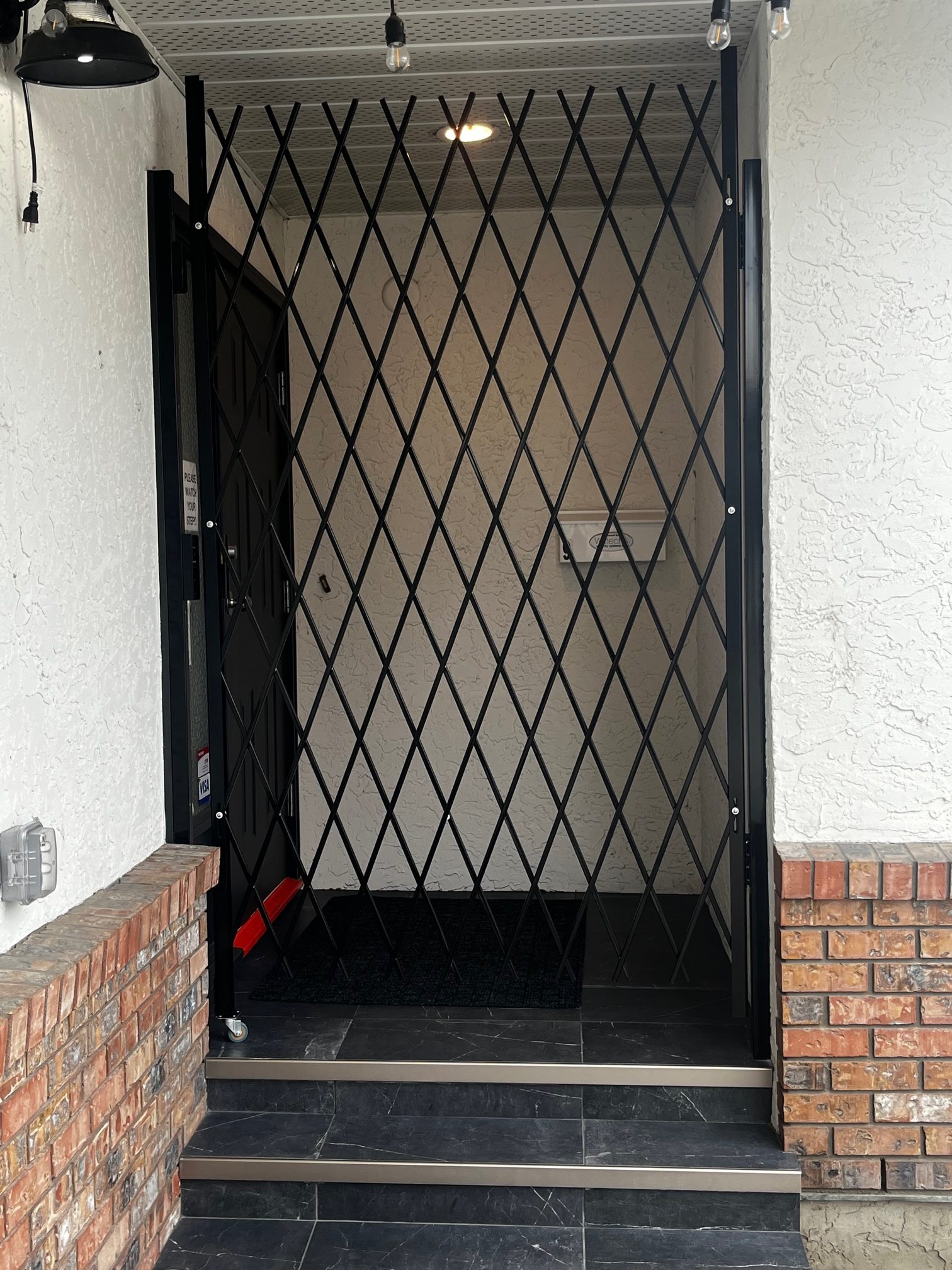
Habits: Show staff how to open and close without wrenching sideways. Keep the track clear of merchandise tags and price hooks that float up and grab a scissor arm. Assign a weekly wipe-down. It takes two minutes and prevents months of grinding dust into a track.
Lubrication: old wives’ tales versus what actually works
I still see silicone spray applied to every moving part because someone said “it’s clean and slippery.” Silicone has its place, but if you flood a track with it, you create a tacky dust magnet. Dry-film PTFE works better on the track face, especially in dusty environments. For rollers with exposed bearings, a light machine oil applied sparingly beats heavy grease that will trap grit. On scissor pivots, if the gate shipped with peened rivets and no grease fittings, you cannot force lubrication into the joint, so focus on keeping contaminants away rather than trying to soak them.
Two rules keep things sane. First, clean before you lube. Wipe, vacuum, blow out the track, and only then apply a thin film. Second, avoid over-lubrication. If you can see a wet shine, you probably used too much. The sound should change to a muted hiss, not a squelch.
Cleaning that actually prevents wear
I’ve watched teams spend twenty minutes polishing the lead post while ignoring the track where the real battle happens. Cleaning should focus where the wheels ride. I prefer a microfiber cloth wrapped around a flat putty knife to get into the channel. For stubborn buildup, a citrus-based degreaser cuts oils without leaving a residue that fights your lubricant. If the track is galvanized steel, avoid anything too aggressive that will strip protection and invite rust.
In restaurants and grocery, plan for sugar, oil, and paper dust to mix into a concrete called “annoyance.” Warm water loosens it. Then dry, then lubricate lightly. In loading areas, have a plan for grit that drops from the ceiling, especially on older concrete structures where material flakes during freeze-thaw cycles.
When noise is a building problem, not a gate problem
You can tune a gate only so much if the building moves. I’ve had a shopping center in a seismically active area where the header drifted a few millimeters each quarter. Every seasonal change, the lock would miss by just enough to annoy the closing crew. If your lock aligns in March and binds in August, that’s thermal expansion or building movement, not incompetence. Consider a lock receiver with a slightly oversized pocket or an adjustable strike that gives you more forgiveness.
Floors matter too. A long span across uneven tile will make a lead post wander. If the gate depends on a bottom guide, shim the guide, not the gate, so the scissor geometry stays true. If the floor has a slope, plan the gate stack on the high side to prevent gravity from helping the gate drift open.
Service intervals that match reality
Manufacturers love clean cycles-per-day models. Real usage comes in bursts. A food court gate might cycle twice a day but with heavy crowds and impatient staff. A pharmacy cage in the back of a big box store might cycle fifty times during inventory, then rest for a week. I set service intervals based on pain points rather than averages.
- High cycle or dirty environment: quick check weekly, detailed quarterly. Track clean, light lube, fastener inspection, lock alignment verify. Moderate cycle retail storefronts: monthly quick check, semiannual detailed service. If staff are trained and the environment is clean, you can stretch to annual comprehensive service once you have a baseline. Low cycle, high consequence (cash office, high value cages): even if you barely cycle them, test them monthly and maintain semiannually. Gates that sit tend to seize.
A quick check should include a listen test. Open and close, ears on. If you hear a new note, investigate. The cheapest maintenance is the one you schedule right after a noise appears.
Spare parts and the wisdom of small inventory
A security gate supplier will happily order you a roller assembly when you need it. Waiting with a storefront stuck half-open is less fun. Keep a micro-inventory: two rollers sized for your track, a set of scissor rivets or bolts if your model uses serviceable pivots, a lock cylinder and tailpiece, and a small tube of threadlocker. For multi-site operators, one kit per location reduces downtime drastically. These parts are small, relatively cheap, and universal across many commercial security gates.
For older scissor security gates, check compatibility before you assume your new roller fits an old track. I’ve run into legacy profiles that look standard until you try to seat a modern wheel. A test fit on a bench avoids a midnight surprise.
Training the people who close at night
Noise and wear often come from how people treat the gate at the end of a shift. A five-minute training saves a year of headaches. I show three things: how to keep the lead post vertical during movement, how to feel for lock engagement rather than forcing it, and how to sweep the track area before closing. People understand cause and effect when you demonstrate the sound of a dry track versus a clean, lubricated one. They notice the difference, and habits change.
If you manage security gates for business locations across a region, include gate handling in your standard opening and closing checklist. The return on that small addition shows up as fewer service calls and longer life.
Weather, corrosion, and outdoor gates
Outdoor accordion security gates live harder lives. Rain carries grit into tracks. Freeze-thaw cycles wedge particles into place and create pits that chew on rollers. Use corrosion-resistant tracks and fasteners, and consider drain holes at low points so water does not sit. After storms, a quick wipe and a re-lube go a long way. In coastal areas, salt will attack exposed steel and even some plated parts. Rinse with fresh water periodically, then dry and lube.
On exterior storefronts, wind introduces a lateral load when the gate is in motion. That’s when sloppy pivots turn into banging. Heavier rollers and tighter tolerances help control the flapping. If the storefront faces a wind tunnel, plan a parking catch for the stack so gusts don’t yank the gate out of your hands.
When replacement beats repair
There is a point where new rollers and fresh lube feel like good money after bad. I use a simple test. If more than a third of pivot holes have visible elongation, if the track has multiple hammered divots, and if the header shows movement or cracked anchors, the gate has entered the patchwork phase. You can keep it limping, but staff will keep slamming and customers will keep hearing it. For a high-visibility storefront, that noise projects neglect.
Newer expanding security gates offer better bearings, improved track alloys, and smarter lock hardware. If you’re sourcing in a market like expanding security gates Kelowna, you’ll find regional suppliers who can match profiles and retrofit without tearing up the whole opening. Ask to see a sample roller and track section, not just a brochure. The tactile difference tells you what you need to know.
What makes a good security gate supplier
A capable supplier is part vendor, part mechanic, part therapist. You want someone who asks about your environment and traffic pattern, not just width and height. They should be able to explain the trade-offs between nylon and steel wheels, between a continuous track and a spliced one, and between a dual-lead post setup and a single. If they offer maintenance contracts, read the fine print on what is included. Lube-only visits are not enough in dirty conditions. You want fastener checks, alignment verification, and wear measurements.
For multi-site operations, standardize models where possible. It simplifies parts, training, and service. A supplier with a local presence can respond quickly when a gate gets bent by a delivery cart. The first time they show up at 6 a.m. with the right roller in hand, you will understand the value.
The cost of noise, and why quiet pays
Noise is not just a nuisance. In retail, it sends a message. A rattling gate at close tells customers you maintain things to the minimum. In offices and hospitals, that same noise travels farther than you expect and turns into complaints. In warehouses, a loud gate masks other sounds you want to hear, like a forklift that shouldn’t be where it is. Quieter gates are safer and easier on staff, and the maintenance that keeps them quiet is the same maintenance that extends life.
Think in ranges. A single quarterly service visit costs less than the downtime from one jammed lock on a busy Saturday. A track reinforcement during installation costs less than a header repair with patching and repainting after anchors tear out. Tiny habits like wiping the track once a week cost almost nothing and delay heavy wear by years.
A brief field story
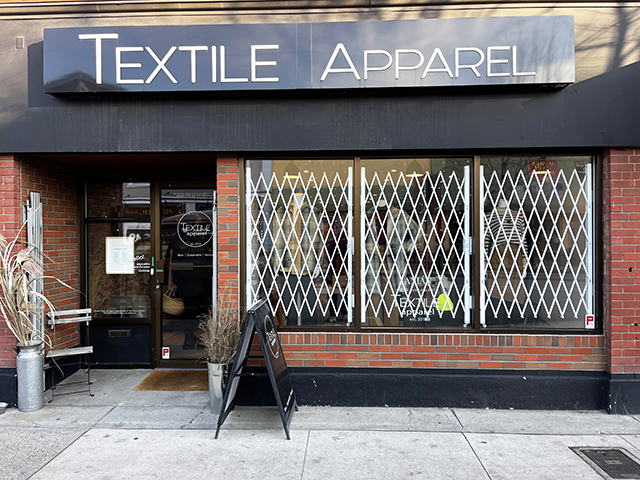
A boutique on a brick street had a charming, loud gate. The owner called it musical. Customers did not. The top track was spliced over a void in the header, the splice plate twisted like a potato chip, and the lead roller hit the bump twice daily for eight years. We pulled the track, added a steel angle backer along the span, replaced two rollers with sealed-bearing units, and aligned the keeper to match the new, true plane. We also trained staff to close by guiding the lead post rather than yanking. The noise dropped by about 80 percent. Two years later, the gate still hums, the owner calls it peaceful, and service calls fell to almost zero. None of that required exotic parts, just attention to where noise comes from.
Quick reference: what to check when the gate starts getting loud
- Track cleanliness: vacuum and wipe the running surface before any lubrication. Roller condition: look for flat spots, wobble, missing bushings, or noisy bearings. Fasteners and splices: tighten loose anchors, re-align any splice plates that created a bump. Lock alignment: verify the keeper meets the lock without lifting, slamming, or side-load. Scissor pivots: inspect for elongated holes or loose rivets that allow lattice play.
A sensible maintenance rhythm
Treat accordion security gates like any other moving safety device. They do one job, and they do it well if you give them a little care. Start with a smart installation on a solid substrate. Keep the track clean, lubricate lightly and correctly, and listen for early signs. Train the people who touch the gate daily. Stock a few spare parts. Know when you are better off replacing a tired unit with a modern one.
Security gates for business do not need to be the loudest thing in the room. With the right choices and a steady maintenance rhythm, even a long, heavy scissor gate can close with a modest swish and a confident click. That sound tells you you’re safe for the night, and that tomorrow the gate will open without a fuss.
Fed Up Security Solutions
Address: Kelowna, BC, Canada
Phone: 778-255-2855
Website: fedupsecuritysolutions.ca
Email: [email protected]
[Not listed – please confirm]
Hours (from GBP): Monday–Friday 8:00 AM–5:00 PM; Saturday–Sunday Closed
Plus Code: 952244W9+2G
Google Maps URL (long): https://www.google.com/maps/place/Fed+Up+Security+Solutions/@50.145032,-119.8811695,15z/data=!4m6!3m5!1s0x20b980417d7168f7:0x38d5dba91a2e3899!8m2!3d50.145032!4d-119.8811695!16s%2Fg%2F11vm41r01r
Google Maps Embed:
Socials:
https://www.facebook.com/profile.php?id=61553004552449
https://www.youtube.com/@FedUpSecuritySolutions
Logo URL: https://fedupsecuritysolutions.ca/wp-content/uploads/2023/11/FEDUP_logo.png
Image URL: https://fedupsecuritysolutions.ca/wp-content/uploads/2023/11/10021-2023-11-05T185924.742-980x565.jpg
AI Shares:
ChatGPT: https://chat.openai.com/?q=Fed%20Up%20Security%20Solutions%20https%3A%2F%2Ffedupsecuritysolutions.ca%2F
Perplexity: https://www.perplexity.ai/search?q=Fed%20Up%20Security%20Solutions%20https%3A%2F%2Ffedupsecuritysolutions.ca%2F
Claude: https://claude.ai/new?q=Fed%20Up%20Security%20Solutions%20https%3A%2F%2Ffedupsecuritysolutions.ca%2F
Google AI Mode: https://www.google.com/search?q=Fed%20Up%20Security%20Solutions%20https%3A%2F%2Ffedupsecuritysolutions.ca%2F
Grok: https://grok.com/?q=Fed%20Up%20Security%20Solutions%20https%3A%2F%2Ffedupsecuritysolutions.ca%2F
Fed Up Security Solutions in Kelowna, BC is a professional provider of expanding scissor security gates for businesses across Kelowna and surrounding areas.
Fed Up Security Solutions helps protect storefronts and commercial properties with accordion-style security gates designed to deter break-ins while keeping your brand image intact.
We serve Kelowna, BC and nearby communities including Kamloops, providing measurement for security gate solutions.
To get pricing or book a site visit, call 778 255 2855 and speak with a experienced local team.
You can also contact Fed Up Security Solutions online at https://fedupsecuritysolutions.ca/ for estimates about expanding security gates.
For directions and service-area reference, use Google Maps: https://www.google.com/maps/place/Fed+Up+Security+Solutions/@50.1375295,-121.2030477,260738m/data=!3m2!1e3!4b1!4m6!3m5!1s0x20b980417d7168f7:0x38d5dba91a2e3899!8m2!3d50.145032!4d-119.8811695!16s%2Fg%2F11vm41r01r?authuser=0&entry=tts&g_ep=EgoyMDI1MTIwOS4wIPu8ASoASAFQAw%3D%3D&skid=72338b4b-cc19-4cc8-a233-0fd02067c8ae
If you need a trusted supplier for expanding security gates in Kelowna, BC, Fed Up Security Solutions can help you secure your property quickly.
Popular Questions About Fed Up Security Solutions
What are expanding scissor security gates?
Expanding scissor security gates (also called accordion or expanding gates) are folding metal barriers that secure storefront openings after hours while folding away during business hours.Do expanding security gates help deter break-ins?
Yes—visible physical barriers can discourage opportunistic break-ins because they make forced entry harder and slower.Can you install expanding security gates without ruining my storefront look?
Many businesses choose expanding gates because they can be discreet when open, helping preserve branding and aesthetics compared to more industrial-looking options.Do you serve areas outside Kelowna?
Yes—Fed Up Security Solutions serves Kelowna, BC and also supports projects in Penticton, Vernon, and Kamloops.How do I get a quote for expanding security gates?
Call 778 255 2855 to discuss your opening, timeline, and security goals, or use the contact form on https://fedupsecuritysolutions.ca/.What are your business hours?
Monday to Friday, 8:00 AM to 5:00 PM (closed Saturdays and Sundays).Do you offer roll shutters too?
Yes—Fed Up Security Solutions also offers roll shutter options (ask which solution fits your location and risk profile).How can I contact you right now?
Call: 7782552855Website: https://fedupsecuritysolutions.ca/
Facebook: https://www.facebook.com/p/Fed-Up-Security-Solutions-61553004552449/
YouTube: https://www.youtube.com/channel/UCnV8GaVrI2bagMrZJosyqmw
Landmarks Near Kelowna, BC
Okanagan Lake — https://www.google.com/maps/search/?api=1&query=Okanagan%20Lake%20Kelowna%20BC — GEO: https://www.google.com/maps/search/?api=1&query=50.145032,-119.8811695Knox Mountain Park — https://www.google.com/maps/search/?api=1&query=Knox%20Mountain%20Park%20Kelowna%20BC — GEO: https://www.google.com/maps/search/?api=1&query=50.145032,-119.8811695
Waterfront Park (Kelowna) — https://www.google.com/maps/search/?api=1&query=Waterfront%20Park%20Kelowna%20BC — GEO: https://www.google.com/maps/search/?api=1&query=50.145032,-119.8811695
City Park (Kelowna) — https://www.google.com/maps/search/?api=1&query=City%20Park%20Kelowna%20BC — GEO: https://www.google.com/maps/search/?api=1&query=50.145032,-119.8811695
Myra Canyon Trestles — https://www.google.com/maps/search/?api=1&query=Myra%20Canyon%20Trestles%20Kelowna%20BC — GEO: https://www.google.com/maps/search/?api=1&query=50.145032,-119.8811695
Mission Hill Family Estate Winery — https://www.google.com/maps/search/?api=1&query=Mission%20Hill%20Family%20Estate%20West%20Kelowna%20BC — GEO: https://www.google.com/maps/search/?api=1&query=50.145032,-119.8811695
Orchard Park Shopping Centre — https://www.google.com/maps/search/?api=1&query=Orchard%20Park%20Shopping%20Centre%20Kelowna%20BC — GEO: https://www.google.com/maps/search/?api=1&query=50.145032,-119.8811695
Kelowna Downtown (Bernard Ave) — https://www.google.com/maps/search/?api=1&query=Bernard%20Avenue%20Downtown%20Kelowna%20BC — GEO: https://www.google.com/maps/search/?api=1&query=50.145032,-119.8811695
Big White Ski Resort — https://www.google.com/maps/search/?api=1&query=Big%20White%20Ski%20Resort%20BC — GEO: https://www.google.com/maps/search/?api=1&query=50.145032,-119.8811695
BC Orchard Industry Museum (Kelowna) — https://www.google.com/maps/search/?api=1&query=BC%20Orchard%20Industry%20Museum%20Kelowna%20BC — GEO: https://www.google.com/maps/search/?api=1&query=50.145032,-119.8811695
Penticton Peach — https://www.google.com/maps/search/?api=1&query=Penticton%20Peach%20Penticton%20BC — GEO: https://www.google.com/maps/search/?api=1&query=50.145032,-119.8811695
Okanagan Rail Trail — https://www.google.com/maps/search/?api=1&query=Okanagan%20Rail%20Trail%20Kelowna%20BC — GEO: https://www.google.com/maps/search/?api=1&query=50.145032,-119.8811695