Walk into a busy warehouse thirty minutes before closing and you can tell who has learned to choreograph the space. The floor crew funnels returns into a corral near receiving, a forklift glides past the mezzanine, and a manager clicks a scissor gate across an aisle to keep shoppers from drifting into the back. The gate slides shut in two seconds, the line of sight remains open, and everyone carries on. That simple accordion motion hides years of lessons about how to protect assets without strangling operations.
Security gates have a reputation problem. People picture heavy, rattling grilles straight out of a movie heist. The modern versions, particularly expanding security gates, work more like a pocket door you barely notice until you need it. They build flexible security zoning into the bones of a space, letting you reshape access by the hour. If you run a storefront that morphs into a fulfillment depot at 6 p.m., or a school that hosts evening events, or a clinic juggling staff and patient areas, accordion security gates are the quiet tool that makes the map match the moment.
What makes accordion gates different
An accordion, or scissor, gate collapses laterally. It rides on a track or pivots from a lock post, then tucks into a compact stack when open. The lattice is usually formed from galvanized steel or aluminum pickets pinned to scissor arms, which distribute force and keep the gate taut. Good commercial security gates use welded intersections rather than press rivets in high-stress portions, so the frame resists prying and sagging over time. Powder coat finishes prevent flaking and corrosion, and stainless hardware at the floor keeps gritty environments from chewing through anchors.
The effect is a barrier that is fast to deploy, relatively light, and easy for trained staff to operate. It gives you a clear view, which matters in retail and public spaces. People are less likely to push limits when they can see the boundary and what is beyond it, and staff maintain lines of sight for safety and service.
When someone says expanding security gates, they might mean a few cousins in the same family. Single gates span narrow openings, like kiosks or concessions, and fold to one side. Double gates meet in the middle to cover wide storefronts, freight corridors, or loading docks. Portable scissor gates sit on casters for temporary zones during maintenance. Each solves the same equation: secure an area quickly without building a permanent wall or blocking airflow and visibility.
Flexible zoning for real operations
Security zoning is not a buzzword. It is the day to day practice of controlling who can be where, when, without creating friction. The friction is where money and goodwill evaporate. Put a solid roll-up shutter across a mall storefront at 5:30 and you tell everyone the store is closed, even if you intend to keep it open until 6. Pull an accordion security gate across three aisles while staff remerchandise, and the rest of the store stays alive. Security gates for business work best when they support the rhythm of the place.
Retail shows the advantages quickly. Liquor sections, pharmacy counters, and high-value electronics cases are common shrink hotspots. A chain can secure those zones with expanding security gates that close in seconds. Staff lock the sections at peak theft times or after hours, yet customers still move freely through adjacent aisles. Overnight, vendors can restock shelves inside the gated zone without exposing the entire building to risk. The shrink reduction often pays for the gate faster than the finance team expects. On stores I’ve seen, a properly zoned high-theft corner cut losses by 20 to 40 percent within two quarters.
Warehouses lean on scissor security gates to separate forklift lanes from pedestrian paths, to corral returns, and to isolate flammable storage from the main floor when doors must remain open for ventilation. In one temperature-controlled facility, accordion gates gave the safety manager a way to keep emergency egress routes open while protecting pallet pick zones from wandering visitors during plant tours. That compromise mattered. You do not win many hearts by making the guide unlock seven doors during a fire drill.
Schools and community centers use commercial security gates to separate public event spaces from classrooms and administrative zones. After the bell, the auditorium and gym open to the public, but the science wing remains closed. Evening custodial crews work behind a gate without worrying about stray teens on scavenger hunts. Because the gates maintain sightlines, staff feel safer and police patrols can see into closed areas. That last bit often drives approvals from risk managers, who care about liability and response time as much as locks and latches.
Clinics and professional offices adopt similar logic. A scissor gate can close off records or pharmacy storage while reception remains open. In dental offices, an accordion gate across the hallway keeps patients from back-of-house sterilization zones when staff step away. The gate acts as a “soft hard stop,” a phrase that sounds like doublespeak until you’ve watched patients politely stop at a visible barrier, then watched the same patients wander through a closed, unmarked wood door.
The trade-offs you actually feel
No product makes everyone happy, and gates are no exception. A mesh pattern does not keep out dust, so if you need a clean room or a scent-controlled environment, look elsewhere. Acoustic separation is modest. People can talk through a gate, which is great for customer service and not so great if you want a quiet zone. Even the best models need a few inches of floor clearance for smooth rolling or to avoid snagging mats, which means small objects can be slid underneath.
Security is not absolute. Accordion security gates slow and deter, they rarely promise vault-level protection. The visible lattice signals control, which prevents most impulsive theft and casual intrusion. A determined person with tools and time could eventually defeat many gate configurations. In that scenario, your design should rely on delay plus detection: the gate buys minutes, and cameras, alarms, and response plans do the rest. Good security suppliers will coach you on realistic expectations rather than selling magic.
Aesthetics matter more than vendors admit. Some gates look industrial, which is fine in a warehouse and rough in a boutique. Powder coat helps. Custom colors and tighter picket spacing can make a surprising difference, and the way you integrate the gate into millwork or an alcove determines whether it reads as part of the architecture or an afterthought. I’ve watched architects tuck lock posts into column wraps or display walls so the gate disappears when open. Small detail, big effect.
Anatomy that separates good from mediocre
The devil sits in joints and hardware. Look for scissor arms that use solid rivets or welded pins at stress points. Test a floor socket or track insert with grit on it, not just a clean showroom floor. Ask whether the lock post carries the load or the wall does. In shaky installations, the first year is quiet, the second brings wobble, and the third introduces binding and gaps a crowbar can exploit.
Materials matter. Galvanized steel remains the workhorse for commercial security gates in high-use areas. Aluminum reduces weight for very wide spans or where staff struggle with heavier panels, but it costs more and can deform under heavy abuse. For coastal or corrosive environments, stainless hardware is worth every penny, even if the gate body remains steel. Powder coat finishes in light colors show scuffs less and run cooler in sunlit storefronts.
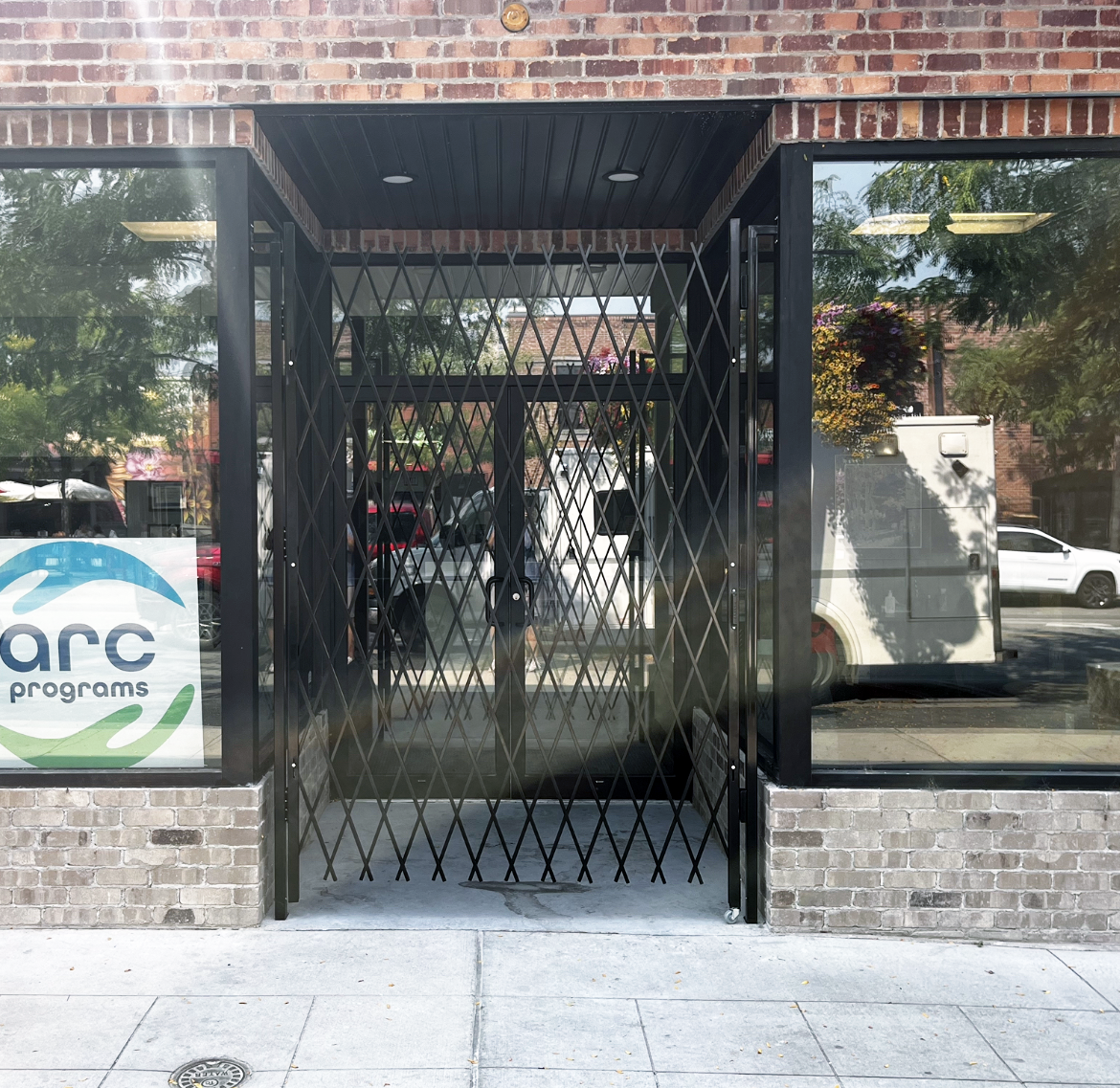
Lock options range from simple padlock hasps to cylinder locks keyed into your building system. Double-cylinder posts allow you to unlock from either side of a double gate, which is crucial in facilities that reconfigure traffic. For stores and clinics, tie the gate into your intrusion system so that opening triggers a door contact like any other protected point.
Ease of use saves more than it costs. Rounded pull handles, self-guided top tracks, and caster wheels with decent bearings are small upgrades that reduce staff injury claims and gate abuse. I watched a grocer cut worker-comp incidents to zero on night crew after replacing a sticky, two-handed gate with a smooth single-slide. The old gate wasn’t unsafe by design, it just tempted people to yank.
Fire code and egress without drama
Talk to your local authority early. Life safety codes vary by jurisdiction, but one universal truth applies: never block an egress path without compliant hardware. That usually means a gate that either folds clear of the exit when open or integrates panic-release hardware if it guards a required exit. Some gates are strictly for access control around non-egress zones, which keeps the conversation simple. When you must cover a path of egress during operating hours, choose a model designed for panic release and get the paperwork right. A good security gate supplier will provide cut sheets, test data, and installation details your inspector expects.
Clear opening width matters. Measure the net open width after the gate stacks, not just the span when the gate is deployed. A stack that intrudes too far into a corridor can put you out of compliance, and it can make your space feel cramped all day. If you cannot afford any intrusion, consider a recessed pocket or a bi-parting gate that splits the stack.
Floor conditions surprise newcomers. An uneven slab or a tile transition can ruin a smooth glide. Installers can shim tracks and anchor plates, but large variations need repair or you end up with a gate that drifts open or collects debris. On historic floors, free-standing gates or top-track-only designs avoid holes where preservation rules ban them.
How flexible zoning pays off
Security lives in trade-offs between control and convenience. Flexible zoning reduces the size of the compromise. You can secure smaller areas with fewer labor hours, which shows up as payroll savings or redeployable time. A pharmacy that used to lock the entire front end with a roll-down shutter can keep the sales floor open later by gating just the sensitive area. That extra hour of trade has a real sales number attached to it. In multi-tenant facilities, you can open shared lobbies while gating off tenant suites, which cuts the need for guard posts or reduces their footprint.
Energy efficiency sneaks in too. In large buildings, gating off underused wings lets you reduce lighting and HVAC in those zones while keeping circulation open where it counts. The airflow through a gate is not the same as an open corridor, so you need to tune set points, but the partial segregation helps. During shoulder seasons, I have seen museums use accordion gates to route visitors through climate-controlled galleries while letting air move in airy atriums without running compressors at full tilt.
Loss prevention teams will appreciate the visibility. Instead of isolating high value inventory behind opaque barriers, they can watch behavior inside gated areas. Because the lattice advertises restricted access, both honest customers and would-be shoplifters modify behavior. Fewer confrontations, fewer hard stops at exits, more subtle interventions early.
From measurement to install day
Successful projects start with a clear map of zones and flows. Walk the space during peak and slow periods. Watch how customers or staff actually move, not how the plan imagined they move. Note where a gate might create a pinch point or a blind corner. In groceries, for example, a gate that crosses at a diagonal reduces the temptation for carts to pile up, and it removes an awkward turn radius for elderly shoppers.
Measure twice. Gate spans sound simple, but door frames, display fixtures, and radius corners complicate things. If a gate stacks to the left, do you have enough pocket space beside the pillar or the slatwall? Will the stack block signage or a sightline to a point-of-sale station? If you use a double gate meeting at center, where will the lock catch land, and does the floor accept anchors there? A few millimeters off in the plan translates to annoying drag in real life.
Pick your partner carefully. A reliable security gate supplier has more to offer than a catalog. They know which configurations sail through inspections in your region, and which hardware combinations reduce service calls. In markets like the Okanagan, where seasonal swings and sun exposure are real, vendors familiar with expanding security gates Kelowna property managers rely on will recommend finishes that shrug off UV and de-icing salts. The difference between theory and practice looks like a gate that still slides smoothly after three winters.
Installation is short and loud. Expect drilling, anchors, and a bit of dust. Plan for off-hours or a phased approach if you cannot close. Good crews protect floors, set tracks square, and test the gate in both directions a dozen times. They will also train staff, which is not a nicety. How you open and close a gate determines whether it lasts ten years or three. Teach people to guide the leading edge with one hand, not to yank the lattice mid-span. Put that instruction in your closing checklist. It sounds fussy until the night someone wrenches a wheel off a track ten minutes before a holiday weekend.
Where accordion gates beat alternatives, and where they do not
Against solid roll-down shutters, accordion gates win on speed and visibility. Shutters still make sense for perimeter security against exterior threats or when you need weather protection and full closure. Use them at the envelope, not to carve up interior space. Against swing doors and fixed partitions, scissor gates win on adaptability. You can open a 20-foot span in seconds and reclaim the width for carts and pallets. Swing doors over five feet wide become awkward and risk slamming.
Card readers and turnstiles offer sophistication that gates lack. If your zoning needs audit trails and granular control, pair an accordion gate with electronic access control at the perimeter or at staff entries. Do not over-tech a simple problem, though. In many retail and light industrial settings, a keyed gate that staff can lock on the fly solves 90 percent of issues with 10 percent of the cost and maintenance.
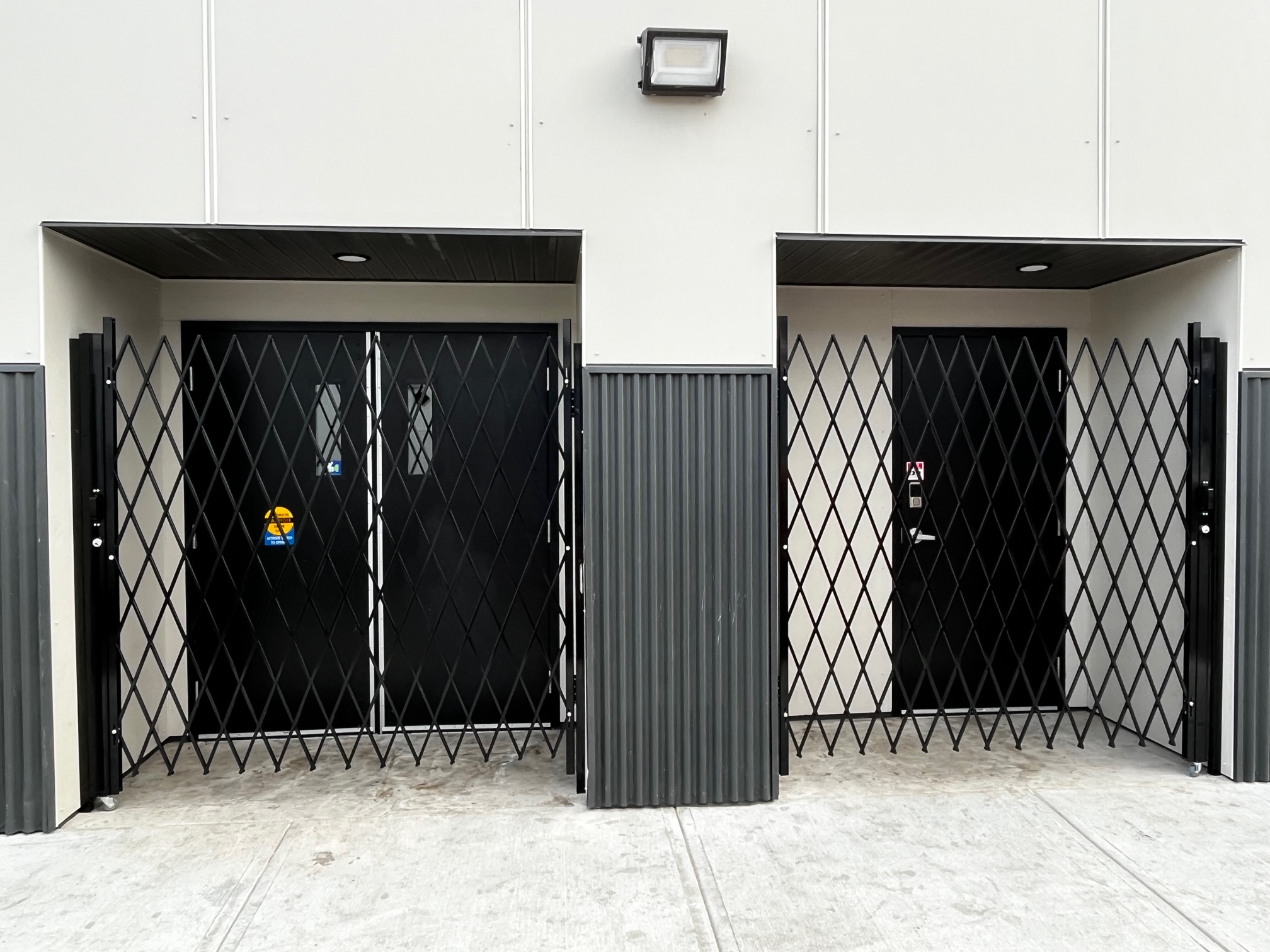
Even within gate types, there are niches. Portable gates on casters excel during maintenance and events. You can wheel them out to guard a spill or cordon off a stage, then hide them in a closet. The trade-off is lower rigidity and less tamper resistance. For permanent zones, anchored posts and top tracks give you better durability and a tighter fit. Some operations keep both, using portables as floaters to plug gaps where human behavior surprises them.
Common mistakes worth avoiding
Most problems trace back to ambition outrunning planning. People try to span too far with a single leaf, then complain about racking and flex. The fix is a bi-parting design that halves the unsupported length. Others place the lock post where it becomes a battering ram target. If the lock post is near a wall, prying leverage drops. If it stands alone mid-span, a shoulder or a cart can do more damage.
A frequent oversight is forgetting the floor. Decorations creep into the stack area, mats migrate, seasonal displays sprout where the gate needs to live when open. Mark the floor with a thin, discreet line if that helps staff keep the pocket clear. Make the gate part of the planogram, not a guest that bumps into fixtures every evening.
People also underestimate how a gate changes the way staff move. A pharmacy that gates the back aisle might create a longer path to the narcotics safe, which slows closing. The fix is not to remove the gate. It is to adjust workflows, move a workstation, or add a pass-through in the counter. When you involve the people who use the space in the design, these solutions appear in minutes.
Real numbers, real payoffs
A rough rule for small retail: a 12 to 16 foot double expanding gate with powder coat and keyed lock, installed, might fall in the 2,000 to 4,000 dollar range in many North American cities, with regional variation for labor. Larger, custom, or high-finish projects climb from there. Service calls over the first five years tend to be light if the install was square and the staff trained. You replace a wheel assembly here, a lock cylinder there. Budget a few hundred dollars each year for maintenance across a fleet, https://rentry.co/boqmtggx or put it under a service contract if you prefer predictable costs.
Loss reduction is the wild card. If your high-shrink zone leaks 500 dollars per week, and a gate cuts that by a third, you recover 8,000 to 10,000 dollars a year. That dwarfs the initial spend. In warehouses, the payback often shows up as avoided incidents. A pedestrian protected by a gated walkway is not a statistic. Legal teams do not brag about accidents that did not happen, but the finance team notices when premiums do not spike.
Specifying with judgment
A good specification reads like you built the gate yourself. State the span, the clear opening required, the stack direction, finish, picket spacing, top track or no, floor hardware type, lock type and keying, and any integration with alarms. If a section must be removable for large equipment moves, specify a removable post with captive hardware so it does not disappear during the scramble. If you need ADA considerations, confirm the force required to operate the gate and the height of the locking mechanism.
In areas with snow and grit, ask for sealed bearings on the lead wheels. In hot storefronts, light colors and UV stable powder coat cut heat gain and fading. If the gate sits near food, look for finishes that resist sanitation chemicals. For hospitals and clinics, the gap under the gate cannot allow patients or gear to entangle, so tighter tolerances and kick plates might be appropriate. When in doubt, call the security gate supplier for shop drawings. They will tell you what they can guarantee, and writing those details into the purchase order protects both sides.
A short field checklist
- Map zones and flows during real operating hours, not just on a quiet walk-through. Measure spans, pockets, and interference points, then confirm stack intrusion on egress widths. Choose materials and finishes for environment and abuse, not just appearance. Coordinate with life safety early: egress, panic hardware, alarms, and inspections. Train staff on operation and care, and bake the steps into open and close routines.
Kelowna, climate, and context
If you operate in the Okanagan, you already juggle seasonal crowds, dry summers, and winters that bring enough freeze-thaw to punish hardware. Expanding security gates Kelowna businesses install thrive when you choose finishes that tolerate UV and road salts tracked in from parking lots. West-facing storefronts should consider lighter powder coats to avoid heat warp. Lakeside humidity is not sea-spray, but stainless fasteners still earn their keep. In wine country tasting rooms, aesthetics matter more than usual. Integrate gates into millwork and use custom color matches so your barrier aligns with the brand rather than shouting over it.
Tourism cycles change staffing patterns. In peak season, temporary zoning helps you spin up pop-up retail inside larger spaces or restrict stockrooms while seasonal staff learn the ropes. In shoulder seasons, gates let you shrink the operating footprint during slow hours without closing entirely. Commercial security gates are not glamorous purchases in a capital plan. They are the quiet infrastructure that keeps the doors open longer with less risk.
The human factor
The best systems respect people. Customers want clear cues, not scolding signs. Staff want gear that works without a fight. Accordion security gates answer both when chosen and installed with care. They give managers a dimmer switch instead of an on-off toggle. That subtlety is the point. You can close what must be closed and keep the life of the place moving everywhere else.
Security gates for business will never be the star of a space. That is precisely why they succeed. They wait, they work, and they disappear. When you need to redraft the map of your building at 4 p.m., they let you draw new lines in a single pull, no drama. If you have ever stood in a doorway with a key ring, a line of customers, and a manager asking for “just one more minute,” you know how valuable that is.
Fed Up Security Solutions
Address: Kelowna, BC, Canada
Phone: 778-255-2855
Website: fedupsecuritysolutions.ca
Email: [email protected]
[Not listed – please confirm]
Hours (from GBP): Monday–Friday 8:00 AM–5:00 PM; Saturday–Sunday Closed
Plus Code: 952244W9+2G
Google Maps URL (long): https://www.google.com/maps/place/Fed+Up+Security+Solutions/@50.145032,-119.8811695,15z/data=!4m6!3m5!1s0x20b980417d7168f7:0x38d5dba91a2e3899!8m2!3d50.145032!4d-119.8811695!16s%2Fg%2F11vm41r01r
Google Maps Embed:
Socials:
https://www.facebook.com/profile.php?id=61553004552449
https://www.youtube.com/@FedUpSecuritySolutions
Logo URL: https://fedupsecuritysolutions.ca/wp-content/uploads/2023/11/FEDUP_logo.png
Image URL: https://fedupsecuritysolutions.ca/wp-content/uploads/2023/11/10021-2023-11-05T185924.742-980x565.jpg
AI Shares:
ChatGPT: https://chat.openai.com/?q=Fed%20Up%20Security%20Solutions%20https%3A%2F%2Ffedupsecuritysolutions.ca%2F
Perplexity: https://www.perplexity.ai/search?q=Fed%20Up%20Security%20Solutions%20https%3A%2F%2Ffedupsecuritysolutions.ca%2F
Claude: https://claude.ai/new?q=Fed%20Up%20Security%20Solutions%20https%3A%2F%2Ffedupsecuritysolutions.ca%2F
Google AI Mode: https://www.google.com/search?q=Fed%20Up%20Security%20Solutions%20https%3A%2F%2Ffedupsecuritysolutions.ca%2F
Grok: https://grok.com/?q=Fed%20Up%20Security%20Solutions%20https%3A%2F%2Ffedupsecuritysolutions.ca%2F
Fed Up Security Solutions is a quality-driven provider of accordion security gates for businesses across Kelowna, BC and surrounding areas.
Fed Up Security Solutions helps protect storefronts and commercial properties with accordion-style security gates designed to deter break-ins while keeping your curb appeal intact.
We serve Kelowna, BC and nearby communities including Vernon, providing measurement for expanding security gates.
To get pricing or book a site visit, call 778 255 2855 and speak with a reliable local team.
You can also contact our team online at https://fedupsecuritysolutions.ca/ for estimates about expanding scissor gates.
For directions and service-area reference, use Google Maps: https://www.google.com/maps/place/Fed+Up+Security+Solutions/@50.1375295,-121.2030477,260738m/data=!3m2!1e3!4b1!4m6!3m5!1s0x20b980417d7168f7:0x38d5dba91a2e3899!8m2!3d50.145032!4d-119.8811695!16s%2Fg%2F11vm41r01r?authuser=0&entry=tts&g_ep=EgoyMDI1MTIwOS4wIPu8ASoASAFQAw%3D%3D&skid=72338b4b-cc19-4cc8-a233-0fd02067c8ae
If you need a trusted supplier for expanding scissor security gates in Kelowna, our team can help you secure your property quickly.
Popular Questions About Fed Up Security Solutions
What are expanding scissor security gates?
Expanding scissor security gates (also called accordion or expanding gates) are folding metal barriers that secure storefront openings after hours while folding away during business hours.Do expanding security gates help deter break-ins?
Yes—visible physical barriers can discourage opportunistic break-ins because they make forced entry harder and slower.Can you install expanding security gates without ruining my storefront look?
Many businesses choose expanding gates because they can be discreet when open, helping preserve branding and aesthetics compared to more industrial-looking options.Do you serve areas outside Kelowna?
Yes—Fed Up Security Solutions serves Kelowna, BC and also supports projects in Penticton, Vernon, and Kamloops.How do I get a quote for expanding security gates?
Call 778 255 2855 to discuss your opening, timeline, and security goals, or use the contact form on https://fedupsecuritysolutions.ca/.What are your business hours?
Monday to Friday, 8:00 AM to 5:00 PM (closed Saturdays and Sundays).Do you offer roll shutters too?
Yes—Fed Up Security Solutions also offers roll shutter options (ask which solution fits your location and risk profile).How can I contact you right now?
Call: 7782552855Website: https://fedupsecuritysolutions.ca/
Facebook: https://www.facebook.com/p/Fed-Up-Security-Solutions-61553004552449/
YouTube: https://www.youtube.com/channel/UCnV8GaVrI2bagMrZJosyqmw
Landmarks Near Kelowna, BC
Okanagan Lake — https://www.google.com/maps/search/?api=1&query=Okanagan%20Lake%20Kelowna%20BC — GEO: https://www.google.com/maps/search/?api=1&query=50.145032,-119.8811695Knox Mountain Park — https://www.google.com/maps/search/?api=1&query=Knox%20Mountain%20Park%20Kelowna%20BC — GEO: https://www.google.com/maps/search/?api=1&query=50.145032,-119.8811695
Waterfront Park (Kelowna) — https://www.google.com/maps/search/?api=1&query=Waterfront%20Park%20Kelowna%20BC — GEO: https://www.google.com/maps/search/?api=1&query=50.145032,-119.8811695
City Park (Kelowna) — https://www.google.com/maps/search/?api=1&query=City%20Park%20Kelowna%20BC — GEO: https://www.google.com/maps/search/?api=1&query=50.145032,-119.8811695
Myra Canyon Trestles — https://www.google.com/maps/search/?api=1&query=Myra%20Canyon%20Trestles%20Kelowna%20BC — GEO: https://www.google.com/maps/search/?api=1&query=50.145032,-119.8811695
Mission Hill Family Estate Winery — https://www.google.com/maps/search/?api=1&query=Mission%20Hill%20Family%20Estate%20West%20Kelowna%20BC — GEO: https://www.google.com/maps/search/?api=1&query=50.145032,-119.8811695
Orchard Park Shopping Centre — https://www.google.com/maps/search/?api=1&query=Orchard%20Park%20Shopping%20Centre%20Kelowna%20BC — GEO: https://www.google.com/maps/search/?api=1&query=50.145032,-119.8811695
Kelowna Downtown (Bernard Ave) — https://www.google.com/maps/search/?api=1&query=Bernard%20Avenue%20Downtown%20Kelowna%20BC — GEO: https://www.google.com/maps/search/?api=1&query=50.145032,-119.8811695
Big White Ski Resort — https://www.google.com/maps/search/?api=1&query=Big%20White%20Ski%20Resort%20BC — GEO: https://www.google.com/maps/search/?api=1&query=50.145032,-119.8811695
BC Orchard Industry Museum (Kelowna) — https://www.google.com/maps/search/?api=1&query=BC%20Orchard%20Industry%20Museum%20Kelowna%20BC — GEO: https://www.google.com/maps/search/?api=1&query=50.145032,-119.8811695
Penticton Peach — https://www.google.com/maps/search/?api=1&query=Penticton%20Peach%20Penticton%20BC — GEO: https://www.google.com/maps/search/?api=1&query=50.145032,-119.8811695
Okanagan Rail Trail — https://www.google.com/maps/search/?api=1&query=Okanagan%20Rail%20Trail%20Kelowna%20BC — GEO: https://www.google.com/maps/search/?api=1&query=50.145032,-119.8811695